“All the whiteness was getting on my nerves.”
— Howardena Pindell on why she made “Free, White and 21.” (1980), New York Times, 2025
Howardena Pindell is almost 83 years old and still making art in her New York studio. The first Black curator at the Museum of Modern Art, she also co-founded A.I.R. Gallery in New York, the first all-female artists’ cooperative gallery in the United States where she was the only non-white founding member.
In 1979 after a traumatic car accident Howardena Pindell began making more explicitly political and autobiographical works that tackled racism, gender, and oppression. In the transgressive short film “Free, White and 21” she plays both herself reciting experiences of anti-Black racism and a racist white woman responding to these stories with replies like“after all we’ve done for you”, and threats of what will happen if Howardena does not stop fighting racism: “we can always find another token”. The 11 minute film first shown in 1980 is essential viewing and even more relevant today than when it was first made.
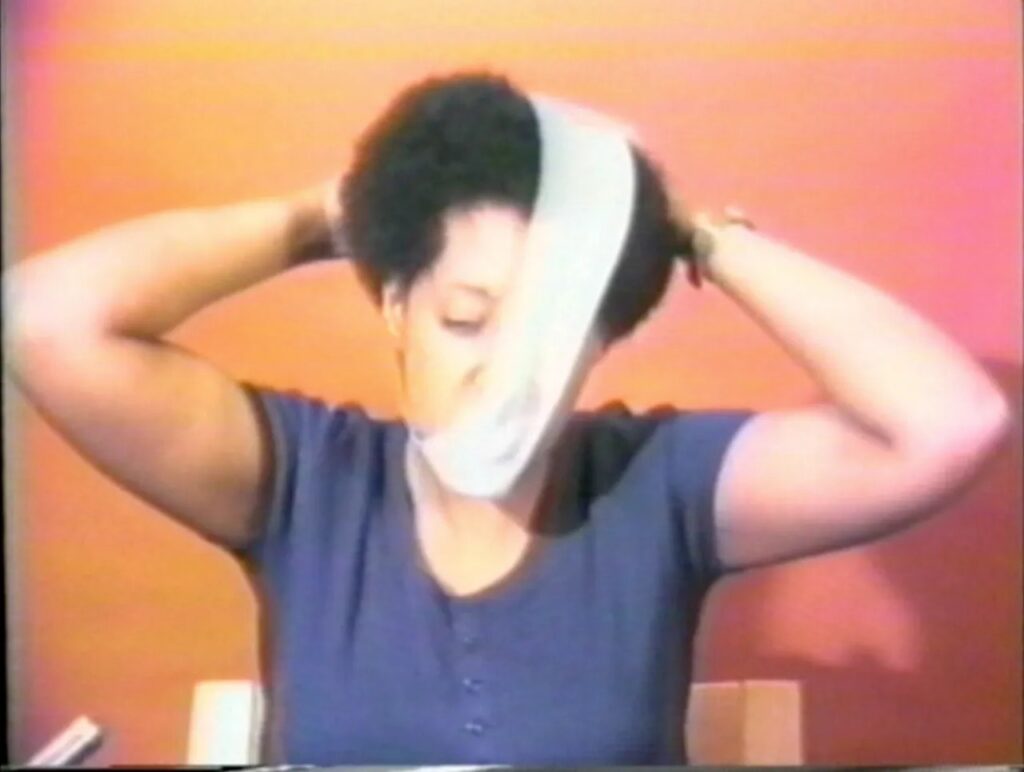
Still from “Free, White and 21.” (1980) Howardena Pindell, Garth Greenan Gallery, New York
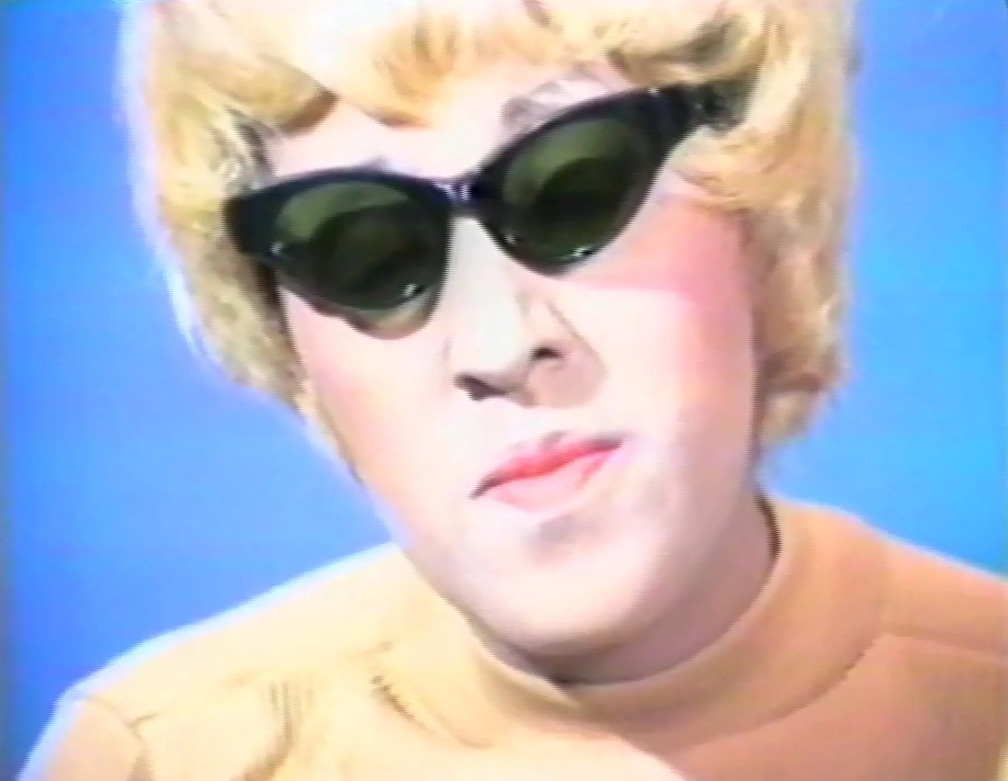
Still from “Free, White and 21.” (1980) Howardena Pindell, Garth Greenan Gallery, New York
In a December 2025 Elephant interview “Full Circle with Howardena Pindell” about her work, and upcoming major shows in London and Tokyo, Howardena said:
“I kind of feel like, as a psychological exercise, it would be cathartic if all Black people made an account of these experiences — to get them out of their minds, out of their bodies. There’s a somatic aspect to all of this. You carry it with you when you just keep these memories to yourself, you know.”
Full Circle with Howardena Pindell, Elephant 2025
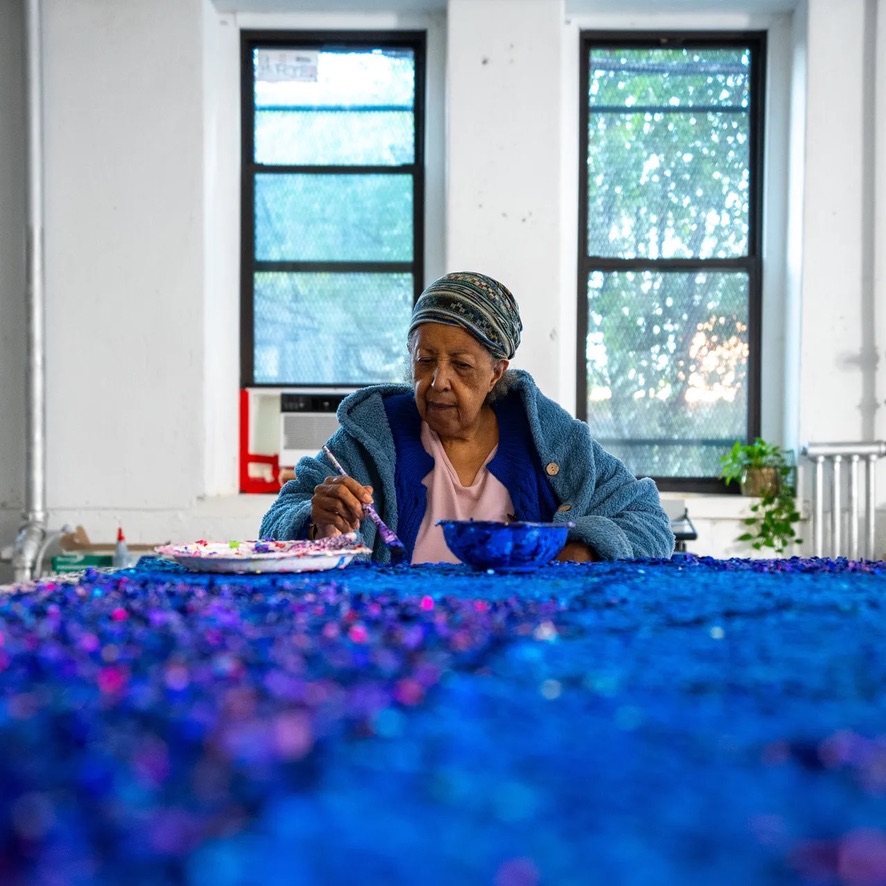
A lot of Howardena’s work makes use of circles, layers of tiny pieces punched out of cardstock and handmade paper, these works are often a monumental size taking many hours to complete. She now works with a team who assist in assembling her works that have been acclaimed and exhibited worldwide. But Howardena’s genius wasn’t always celebrated and there were many, many barriers to her success which came later in life.
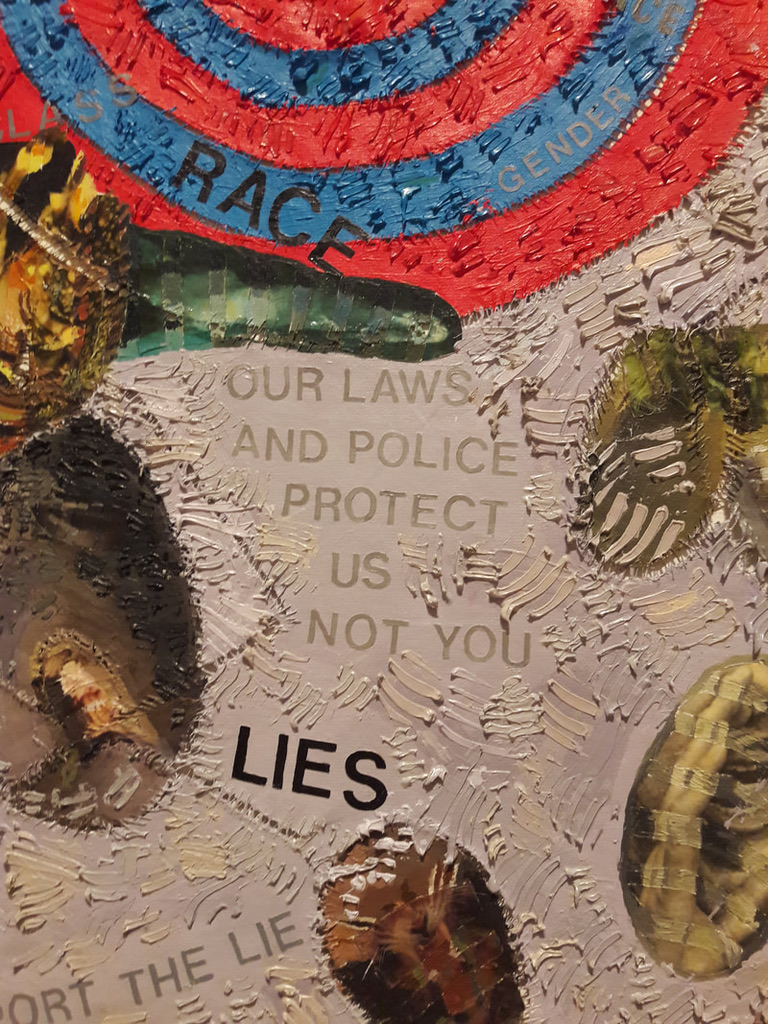
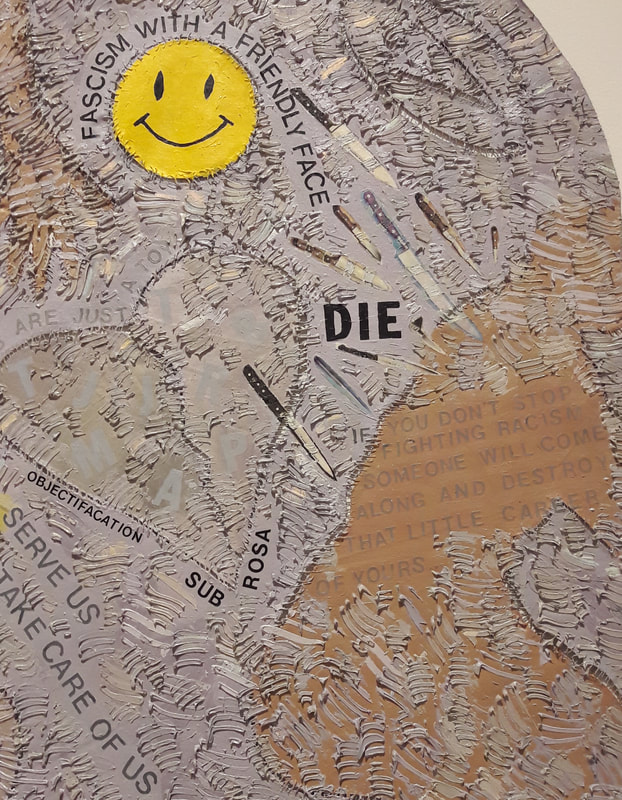
I am working on some art studies after Howardena Pindell’s work so the other night as I slowly punched out and assembled tiny circles onto a grid, I watched a 2021 interview with Howardena where she talks about the unintended prophetic nature of some of her works like “Scapegoat” (1990). This part of her work scared her and she chose to make more and more abstract pieces instead. Looking at those prescient works today I can understand her decision.
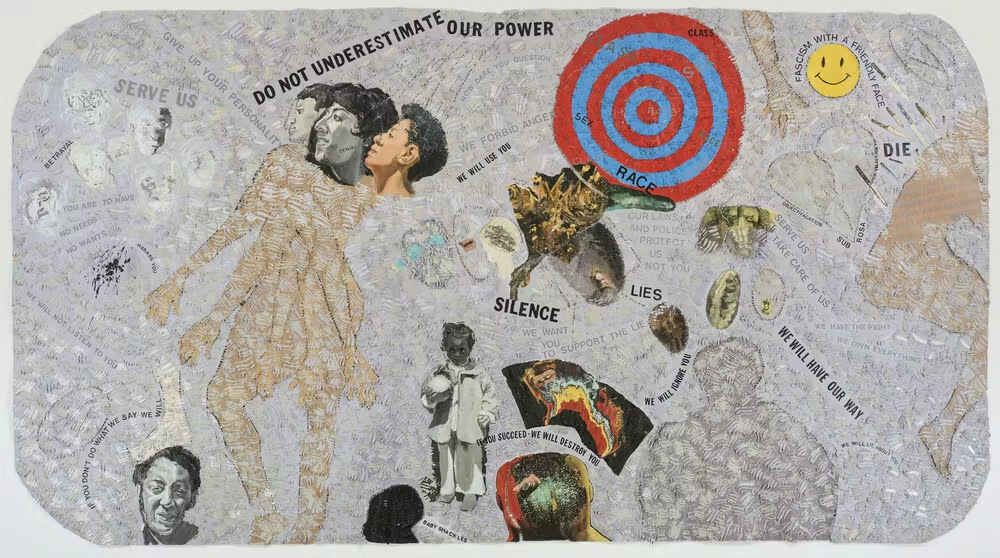
From “Autobiography: Scapegoat” (1990):
“Fascism with a friendly face”
“Our laws and police protect us not you”
“If you don’t stop fighting racism someone will come along and destroy that little career of yours”
From “Autobiography: Air (CS560),” (1988):
“DEPORTATION”
“ID Pass”
“a four year old burned to death”
“HOW DARE YOU QUESTION”
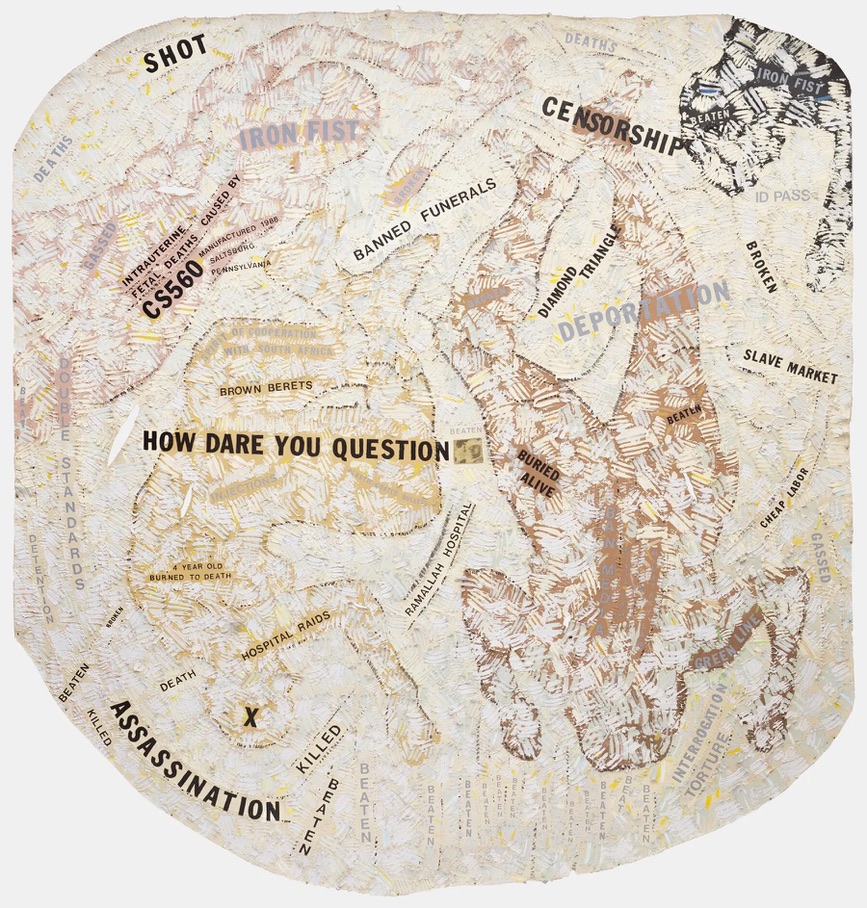
In the centre of this work is a newspaper photograph taken from the New York Times of a beaten Palestinian man whose head is wrapped in a bandage. This was an indictment in 1988 of Israel, South Africa, and weapons made in the USA. It is all too appropriate for the fascist regimes in the USA and apartheid Israel, Sudan, and Iran and their crimes today. Prescient indeed.
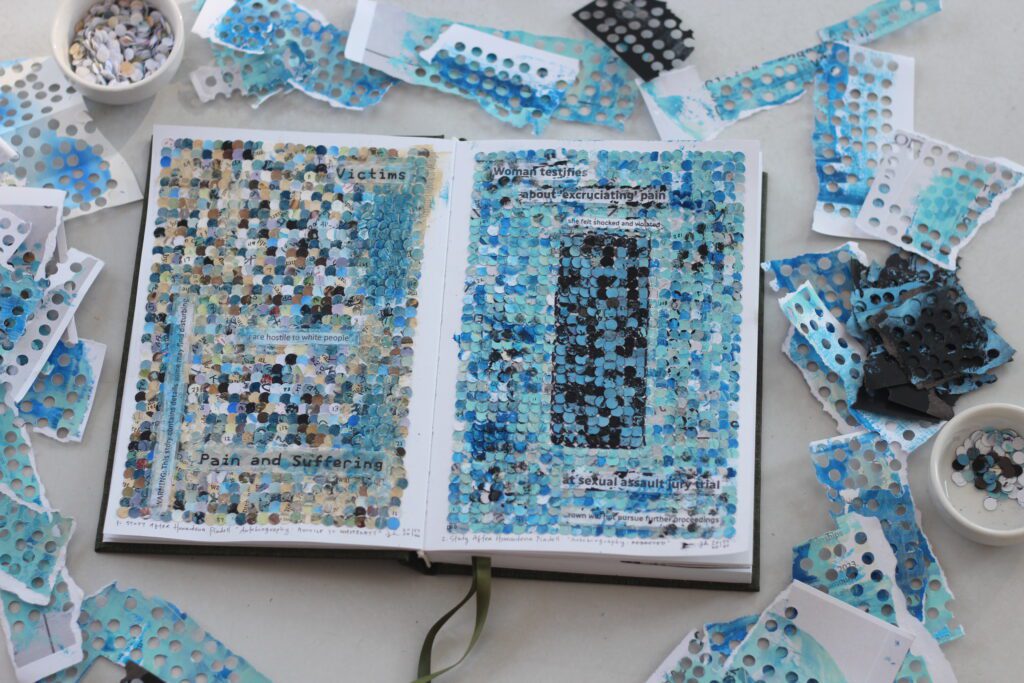
I wanted to spend time with Howardena’s visionary art and explore these ideas by making some autobiographical images that examine my own memories and experiences of whiteness and anti-Blackness. I punched hundreds of circles from a mix of family photographs, redacted documents, newspaper articles and handpainted papers covered with stories I can’t or won’t tell. This time gave me a much deeper respect for Howardena’s process — it takes hours to apply a few hundred circles on a small page — the immense scale she works at is daunting.
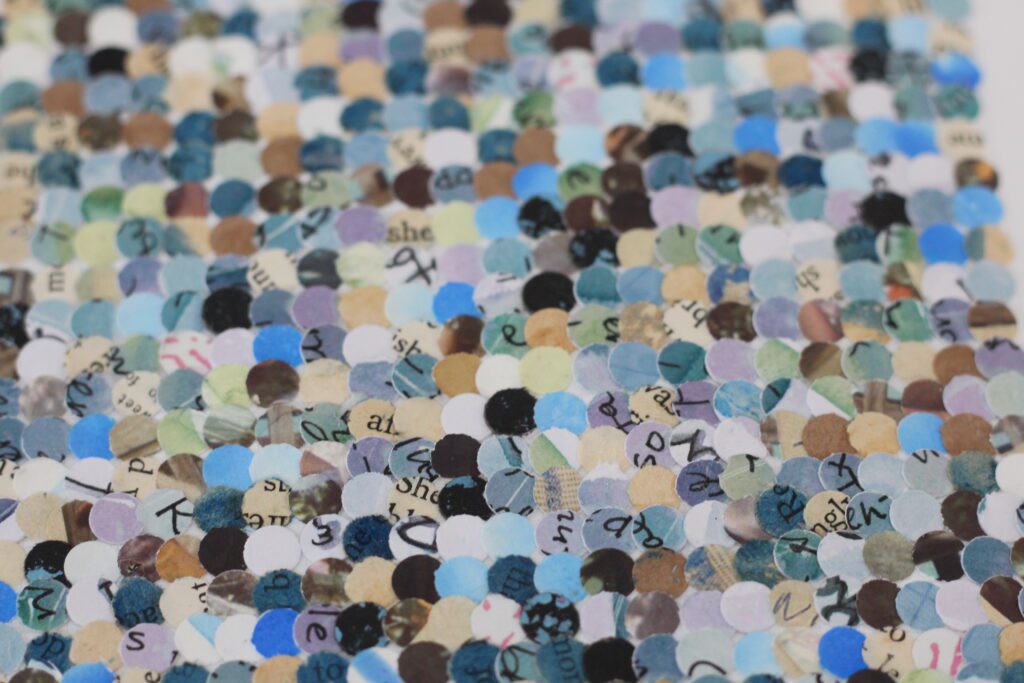
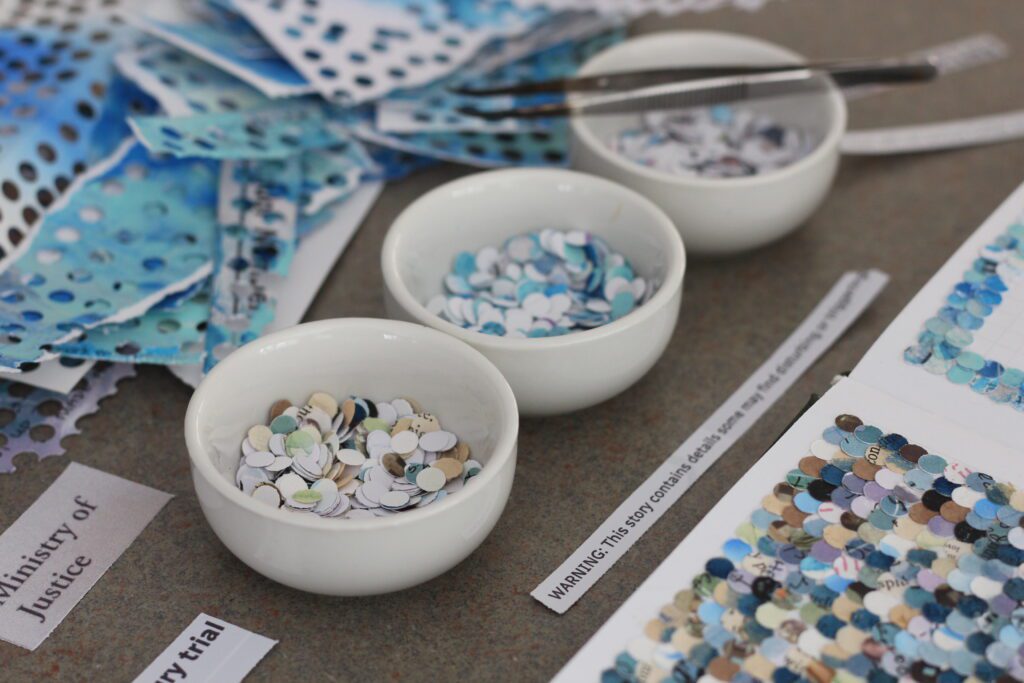
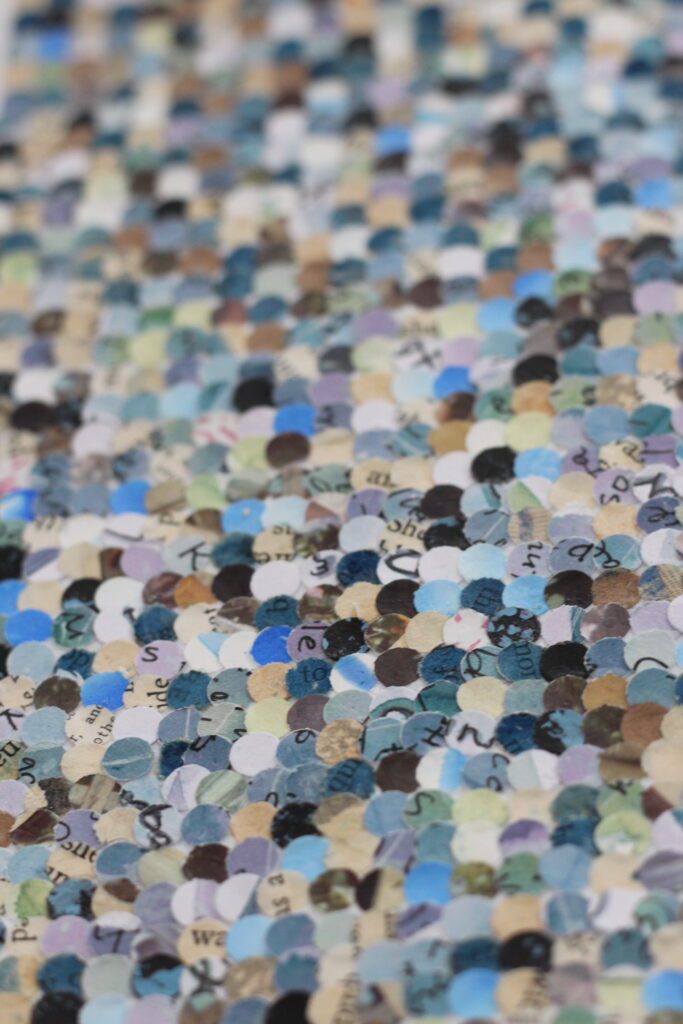
Fragments of my own childhood abuse and incest, photos of abusers, news articles about the 2021 PEI Supreme Court (mis)trial of my mother’s rapist, letters from white women calling me a failure, hostile, divisive. Punch. Punch. Punch. Punch.
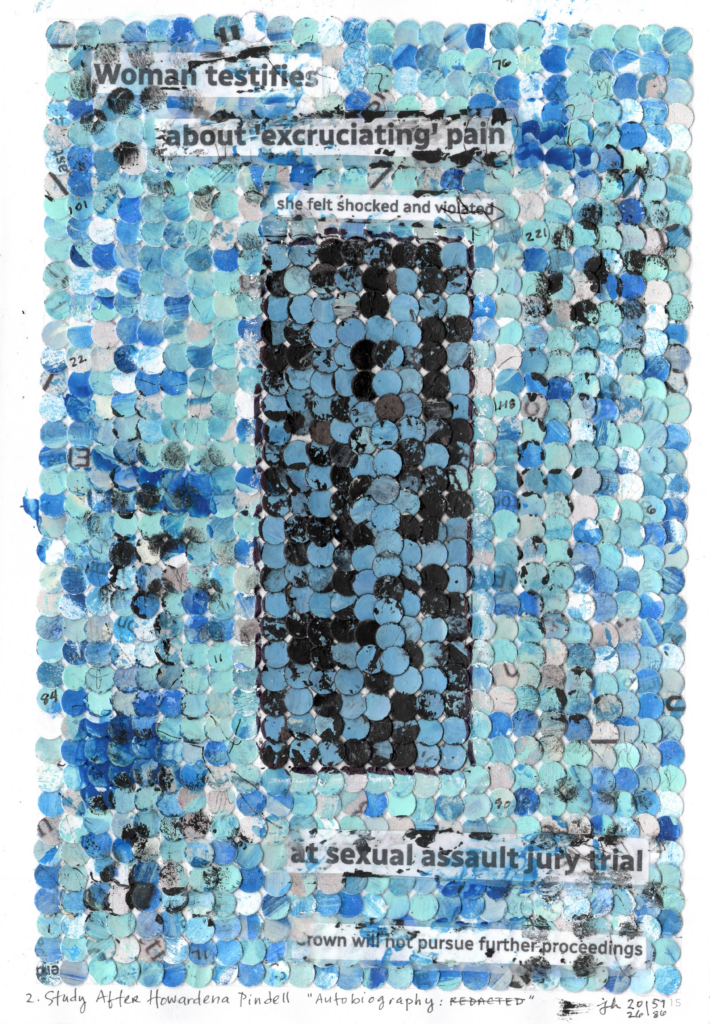
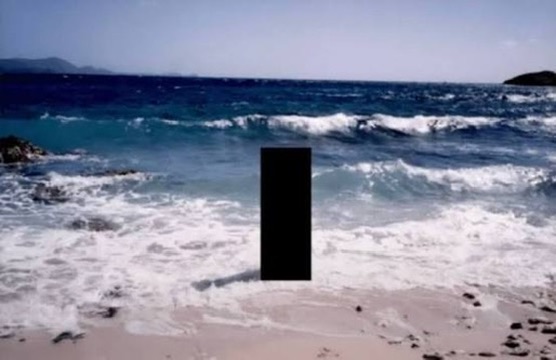
All the times I’ve been punched down on or made to feel less than or literally beaten, the helplessness of hurt and betrayal, of seeing people I love mistreated, of empire and its horrors, children EVAPORATED by thermobaric bombs in Gaza. The vital difference between punching down at other survivors or punching up at abusers and the systems that protect them. One of the studies I make with headlines from the trial ends up looking like the “Black Box” image from the Epstein files. Circles within circles.
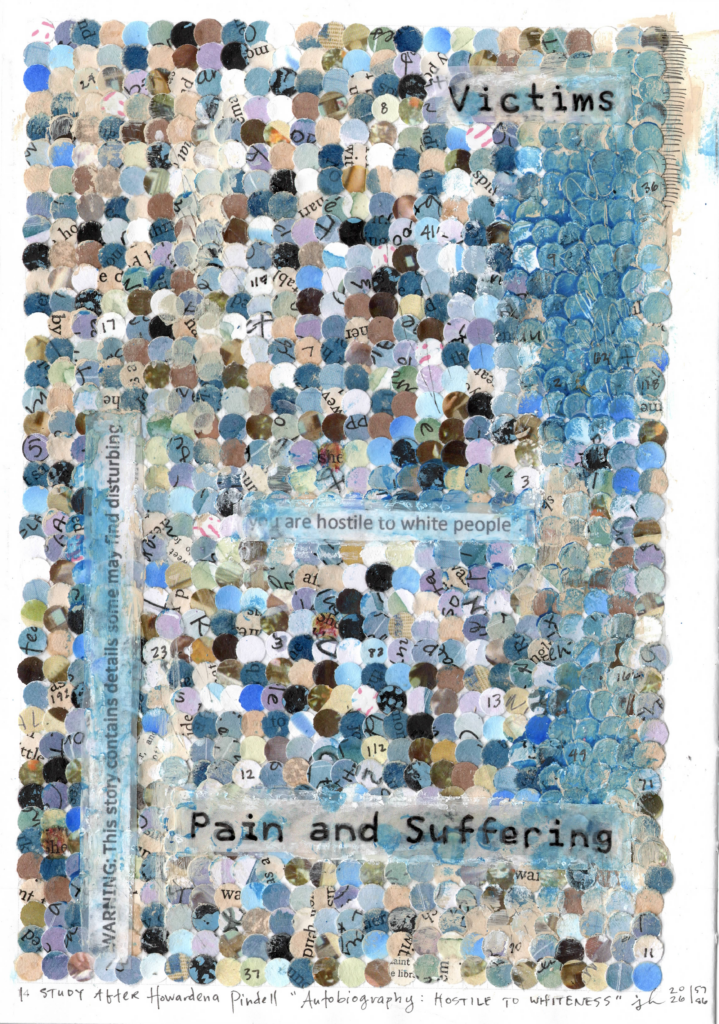
“You are hostile to white people”
From a letter sent to me
“You are hostile to white people” is one of the texts in my other study, sent to me a couple of years ago after I called out anti-Blackness in an organization. The other night as I was assembling circles I watched a 2021 interview with Howardena and the National Gallery of Art where she shares that the one of the responses to her film “Free, White and 21” was that it was “hostile to whites”. How many of us have been accused of hostility for naming hatred and injustice in our workplaces/communities/families/nations.
The response to Howardena’s work in 1980, two years before my birth, is the same response as when I confront racism over 40 years later. Word for fucking word. What, if anything, is the difference between prophecy and pattern recognition?
Howardena’s work is a blueprint for turning pain and suffering into art, to give rage a home outside of my mind, out of my body. I do not have to carry it inside me anymore. I do not have to be anyone’s punching bag — especially not my own. Circle by circle. Story by story. A slow exorcism, an excision. One punch at a time.
Beloved Black elders and visionaries like Howardena Pindell are still alive. Learn about and from them, support their work, study their art, uplift their legacies while we still can.
Thank you Howardena Pindell, thank you, thank you, thank you.
Sources/Further Reading:
- “Full Circle with Howardena Pindell” Elephant, December 2025
- Studio Museum in Harlem
- Howardena Pindell “Free, White and 21” (1980)
- “Howardena Pindell: Inner Circle” | Art21 “Extended Play” (2024)
- Howardena Pindell on Social Change, National Gallery of Art Talks (2022)